
Logi sisse, et jätkata — lõpetame toimingu sinu eest. Pole kontot? Registreeru
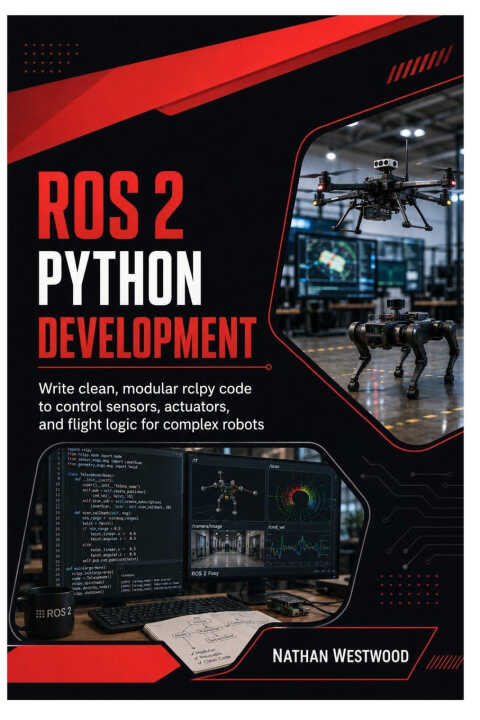
ROS 2 Python Development
Kirjeldus keeles inglise
Build clean, modular ROS 2 robot software with Python and rclpy.Modern robots are rarely controlled by one large program. A practical robot system is usually made of smaller components that read sensors, validate data, make decisions, check safety limits, command actuators, and report status.ROS 2 Python Development shows you how to build that kind of robot software step by step using ROS 2, rclpy, workspaces, packages, nodes, topics, services, actions, parameters, launch files, sensors, actuators, transforms, and testable mission logic.This practical beginner-friendly guide will help you:Understand ROS 2 nodes, topics, services, actions, parameters, messages, namespaces, and remappingInstall ROS 2 Lyrical and prepare a clean development computerCreate ROS 2 workspaces and ament_python packagesWrite your first rclpy node with logging, timers, callbacks, spinning, and clean shutdownPublish and receive data through ROS 2 topicsCreate clean custom messages, services, and action interfacesUse services for quick robot operations and actions for longer tasks with feedback and cancellationOrganise robot settings with parameters, YAML files, and Python launch filesRead and validate sensor data from range sensors, IMUs, position sources, and camera informationCreate sensor watchdogs, detect stale data, and publish processed sensor resultsControl motors, servos, and other actuators with validation, limits, timeouts, and emergency-stop behaviourUse ROS time, coordinate frames, tf2, transforms, robot state, and RVizBuild mission and flight-state logic with idle, armed, takeoff, hold, land, and fault statesSeparate hardware drivers, safety checks, decision logic, and mission coordinationWrite clean, modular, responsive rclpy systems that avoid blocking callbacks and fragile global stateTest Python logic, ROS nodes, publishers, subscribers, services, actions, timeouts, launch files, and complete system behaviourUse logs, rqt_graph, rqt_console, ros2 doctor, and ROS bags for repeatable debuggingThe book builds one connected robot software stack rather than isolated demonstrations. You will create sensor input and validation nodes, actuator command and safety nodes, status and fault reporting, configurable limits, mission and flight-state logic, launch files, tests, and recorded data workflows.The examples can run without a physical robot. Where hardware is discussed, the software is first tested with simulated or manually published data so that the architecture can be inspected before real movement is allowed.Safety is treated as a core design requirement. Python nodes should coordinate high-level robot behaviour, not replace certified motor drives, actuator protection, or a flight controller's stabilisation loop. The book shows how to use command limits, stale-data checks, manual override, emergency-stop behaviour, fault handling, and staged hardware replacement.Learn to build ROS 2 Python systems that are modular, inspectable, testable, and ready to grow from simulation toward real robot hardware.
▾ Loe edasi▴ Peida
Vahetuseks saadaval
0Keegi ei paku seda vahetust praegu.
Teavita, kui saadaval