
Melden Sie sich an — wir schließen die Aktion für Sie ab. Kein Konto? Registrieren
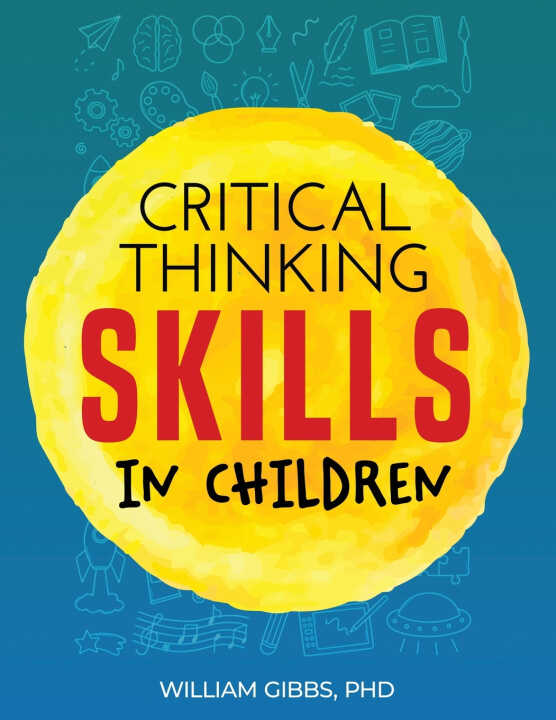
Critical Thinking Skills in Children
Beschreibung auf Englisch
CRITICAL THINKING SKILLS IN CHILDREN - Exam Prep DescriptionCritical Thinking Skills in Children is the study of how children develop the ability to think logically, analyze information, evaluate evidence, solve problems, and make reasoned decisions. It focuses on fostering independent thinking, curiosity, creativity, and reflective judgment through age-appropriate learning experiences. Drawing from developmental psychology, education, and cognitive science, the subject emphasizes the importance of nurturing higher-order thinking skills from early childhood through adolescence.The course introduces the foundations of critical thinking, including observation, questioning, reasoning, analysis, interpretation, inference, evaluation, and decision-making. Students learn how children gradually develop these cognitive abilities as their language, memory, attention, and executive functions mature. Theories of cognitive development, particularly those related to children's thinking and learning, provide the framework for understanding the progression of critical thinking skills.The subject examines strategies for promoting critical thinking in educational and home environments. These include inquiry-based learning, problem-based learning, cooperative learning, project-based activities, storytelling, educational games, open-ended questioning, discussions, debates, experiments, and hands-on exploration. Learners study how teachers and parents can encourage children to ask meaningful questions, evaluate multiple perspectives, justify their opinions with evidence, and reflect on their own thinking.Students also explore the relationship between critical thinking, creativity, communication, collaboration, emotional intelligence, and metacognition. The course emphasizes the development of skills such as identifying assumptions, distinguishing facts from opinions, recognizing bias, evaluating arguments, drawing logical conclusions, and generating innovative solutions to everyday problems.The course further addresses factors that influence the development of critical thinking, including age, cognitive development, language ability, motivation, culture, family environment, classroom climate, technology use, and educational practices. Learners examine methods for assessing children's critical thinking through observation, performance tasks, questioning techniques, portfolios, projects, and authentic assessments.Practical applications focus on designing learning activities that promote reasoning, curiosity, independent learning, ethical decision-making, and reflective thinking across subjects such as language, mathematics, science, and social studies.Overall, Critical Thinking Skills in Children equips educators, parents, and students with evidence-based strategies to foster analytical reasoning, sound judgment, creative problem-solving, and lifelong learning. By developing these skills early, children become more confident learners, effective communicators, responsible decision-makers, and adaptable individuals capable of addressing complex academic and real-world challenges.
▾ Mehr lesen▴ Ausblenden
Zum Tausch verfuegbar
0Niemand bietet diesen Tausch gerade an.
Benachrichtigen, wenn verfügbar