Devam etmek için giriş yapın — işleminiz tamamlanacak. Hesabınız yok mu? Kaydolun
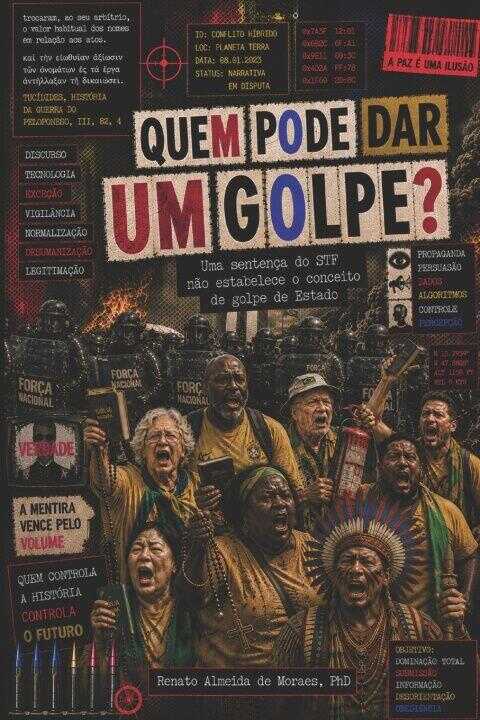
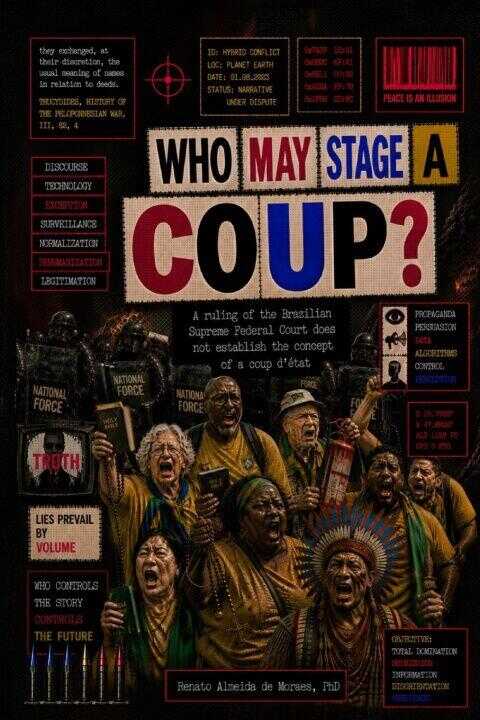
Who May Stage a Coup?
Açıklama İngilizce dilinde
On January 8, 2023, a crowd of some four thousand people breached the police barriers in Brasília and occupied the Congress, the presidential palace, and the Supreme Court. Within seventy-two hours the episode had a name, and the name was the same in five languages: attempted coup d'état. Thirty-two months later the Brazilian Supreme Federal Court sentenced a former president under the offense whose statutory heading is, precisely, coup d'état.This book is about the distance between those two facts. It does not deny what happened, does not contest the conviction, and does not minimize the gravity of the acts. It maintains something narrower and harder to dismiss: that a criminal ruling and a comparative classification are two different operations, and that the answer to one does not establish the answer to the other.The argument turns on a presupposition that public debate practices without examining, and which the book names the principle of categorial equivalence: the supposition that the offense a court applies and the category comparative political science measures are the same category. They are not. Comparative political science reserves the term for the effective displacement of authority by agents who already commanded the state's means of coercion. Brazilian criminal law, by a deliberate and defensible legislative choice, punishes the attempt as a completed offense and declares the result dispensable. The two grammars ask different questions, and one of the strongest pieces of evidence for that requires no theory at all: no coup database in the world uses criminal convictions as a coding source, because a series built that way would record only the failures. Successful ruptures do not produce defendants. They produce constitutions.Seven chapters reconstruct the concept from the outside: four historical lineages, from Naudé in 1639 to the manuals of the twentieth century; six measurement instruments examined by the rules each publishes; the coordination mechanism that decides ruptures inside armies; a comparative design applied to the Brazilian series from 1954 to 2022; and the day itself, reconstructed hour by hour and submitted to Bayesian testing against rival hypotheses. Three further chapters turn to the law, to concept formation, and to the question that gives the volume its title: who controls the controllers?The book states, at the end of every chapter, the conditions under which it will be wrong, formulated so that third parties can check them. Its criterion is deliberately inconvenient to every camp: the same test that removes January 8, 2023, from the category also removes the impeachment of 2016, and classifies as a coup the military movement of November 1955, which Brazilian civic memory absolves. An instrument that cuts on one side only is not an instrument.For readers in comparative politics, civil-military relations, criminal law theory, and the methodology of concept formation.
▾ Devamını oku▴ Daha az
Takasa Açık
0Şu an takasa açan yok.
Takasa çıkınca haber ver